
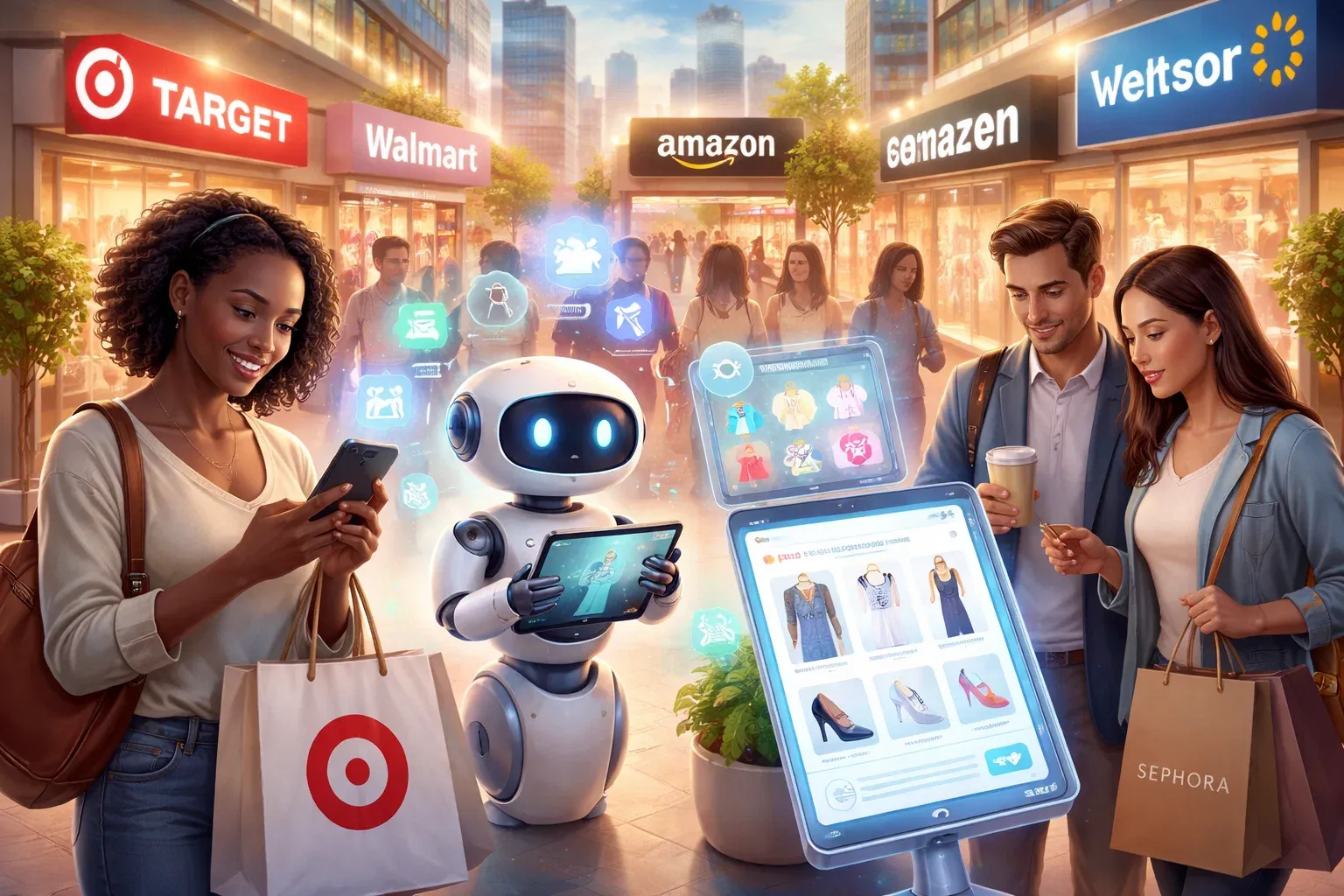
Retail is changing fast. Technology is changing how we shop. In 2026, retail trends 2026 highlight a shift toward smarter, more personalized experiences. One of the biggest changes is agentic commerce.
This technology uses AI and automation to help customers shop better. It helps brands know what customers want. It helps customers find what they need without stress. In this blog, we will look at the top US retailers using agentic commerce.
We will also explain why this trend matters. We'll discuss how it connects to current market trends in the retail industry. We'll also touch on current issues in retail. You will get a clear picture of how shopping is evolving.

Agentic commerce is a new way of shopping online. It uses artificial intelligence (AI) to act like a personal assistant. It studies user behavior. It learns from past searches. It predicts what shoppers want.
Read Also: Which Are the Best Companies to Work for in the US 2026?
This means a store can suggest the right product at the right time. It can answer questions in real time. It can even complete purchases for the user. The experience feels smooth. It feels personal. It feels smart.
Agentic commerce is part of retail trends 2026 for a reason. Shoppers expect more now. They want quick solutions. They want personalization. They want simplicity.
Before we look at who uses it, we must understand why it matters.
Customers feel exhausted from their endless searching. Personalized suggestions save time. They make shopping enjoyable again.
Shoppers buy more when they see items they like. Agentic commerce boosts sales without hard selling.
Search engines on sites are becoming smarter. They recognize intent. They understand what users mean by simple phrases.
Chatbots and digital assistants are part of this. Customers can get help anytime. These benefits tie into current market trends in the retail industry. Retailers are investing in technology to stay competitive. They know customers want better experiences, not lower prices.
But there are also current issues in the retail industry. High costs, labor shortages, and supply chain problems exist. AI and automation help reduce pressure on staff. They help retailers stay efficient.
Let’s look at the top US retailers using agentic commerce for personalized shopping.
Amazon has led online retail for years. It continues to push into AI-driven shopping.
Amazon uses sophisticated algorithms to tailor product recommendations. Data from millions of user actions each day power these systems. Shoppers see personalized lists that include:
Recommended products
Recently viewed items
Products that others bought together.
This is agentic commerce in action. Amazon also uses voice assistants like Alexa. These help users shop hands-free. Through voice, users can ask for suggestions, track orders, and add items to carts.
Amazon’s use of AI and data places it at the forefront of retail trends 2026.
Walmart is another giant investing in agentic commerce. The retailer uses AI to deliver personalized experiences both online and in stores. Walmart’s mobile app recommends products based on your shopping history.
It also suggests items that match your preferences. These suggestions look like smart shopping help. In essence, the app becomes your personal shopper.
Walmart also uses machine learning to optimize inventory. This way, products you want are more likely to be in stock. This solves one of the current issues in the retail industry — out-of-stock problems. Walmart’s focus on AI and personalization has helped it stay competitive with Amazon.
Target uses personalized technology to improve the customer journey. Its app combines sale history with browsing activity. This creates tailored product suggestions.
Target also offers curated lists for seasonal trends. For example, during back-to-school or holiday seasons, we personalize suggestions for each shopper. Users get items that match their lifestyles and needs.
Target’s use of agentic commerce makes shopping feel easier. This matches current trends in retail. Customers now focus on personalization.
Sephora focuses on beauty. It uses AI to help customers find the right products. They use virtual try-on tools. These enable users to test makeup in a virtual environment. The system learns from user choices. It then recommends items based on skin tone, preferences, and style.
Sephora’s app feels like a beauty expert in your pocket. Real-time suggestions and curated picks make shopping fast and fun. Sephora blends high touch with smart technology. This is a strong example of agentic commerce improving the experience.
Best Buy sells electronics and appliances. The store uses agentic commerce to help customers make buying decisions. When shoppers browse online, Best Buy suggests related items. It also highlights accessories that match the main product.
If someone looks at a laptop, the system suggests the best laptop bags and accessories. This personalized journey helps people find what they need. It removes guesswork. Best Buy’s experience shows how agentic commerce can simplify complex purchases.
Home Depot uses AI to help users navigate a huge product catalog. Customers get recommendations based on the tools they search for. The system also suggests project-based kits and materials.
This is useful for customers who may not know the exact product names. AI guides them step by step. It acts like a digital assistant.
Home Depot’s strategy aligns with the retail trends for 2026. It emphasizes user ease and guided experiences.
Although agentic commerce is powerful, there are challenges. These challenges tie into current issues in the retail industry.
Customers worry about how companies use their data. Retailers must protect personal information. They must be transparent about data usage.
AI technologies can be expensive to tool. Smaller retailers may struggle to adopt them in time.
We need trained staff to manage AI systems. There is a high demand for tech experts.
Customers sometimes distrust automated suggestions. Retailers must balance automation with a human touch.
Despite challenges, agentic commerce continues to grow. Stores see it as a tool to improve the experience and sales.
As personalization becomes the norm, agentic commerce will play a bigger role. This trend may even extend into physical stores through:
You Must Also Like: How to Start a Property Management Company in the USA 2025?
Smart shelves
Personalized in-store recommendations
Mobile-based personalized experiences
Shoppers may receive suggestions via text or app when they enter a store. They may get instant offers based on past purchases.
These developments align with current market trends in the retail industry. Retailers want to merge online convenience with in-store experiences.
If a retailer wants to adopt agentic commerce, consider these tips:
Start With Data: Gather and arrange customer data in a manner that ensures ethical handling.
Test Small: Start with simple recommendation engines. Measure performance. Improve over time.
Focus on Consent: Always inform customers about how you use their data. Security builds trust.
Train Staff: Ensure team members understand how the tools work. A skilled workforce improves performance.
Keep It Human: Personalization should help, not overwhelm. Too much automation can feel intrusive.
Customer-first retail experiences will define 2026. Retail trends for 2026 show that personalization is not optional anymore. They expect it. Agentic commerce delivers this personalization.
Stores that use smart tools will win loyal customers. They will offer shopping that feels personal and responsive. Challenges persist, such as data privacy and technology costs in retail. But smart strategies and thoughtful execution can overcome these issues.
As shoppers, you will enjoy this shift. You will enjoy suggestions that help you decide faster. You will see offers that match your style. You will feel understood as a customer.
The future of retail looks more personal. It looks smarter. It looks like agentic commerce.
Retailers can stay competitive by following current market trends in the retail industry. Personalized shopping will be the norm, not the exception.