

I have been watching Utah mortgage rates since 2021. That year, I helped my sister buy a townhouse in South Jordan. She locked in at 2.875 percent. We thought rates would stay low forever. They did not.
Now I am looking at my own situation. I bought my place in 2019 at 3.2 percent. Then I refinanced in 2021 down to 2.6. Like a lot of Utah homeowners, I have been stuck. The gap between my rate and the market rate felt too wide to move.
But something changed in early 2026. Rates dipped. Not a little. They touched levels we have not seen in three years. I called my lender last week. I have been crunching numbers. And I have talked to three different loan officers and two real estate agents about what is happening right now.
Here is what I learned. The Utah housing market mortgage rates dip in early 2026 is real. And if you are waiting until summer to make a move, you might miss the window.
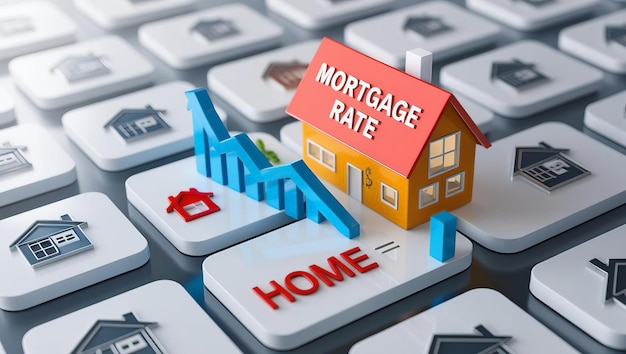
Let me give you the numbers I pulled this morning.
As of March 15, 2026, the average 30-year fixed mortgage rate in Utah is 6.08 percent. That is down from the peak. In October 2023, rates hit 7.8 percent. In late 2025, they were stuck in the mid-to-high 6s.
Read Also: Is the Stock Market Open on New Years Eve 2026?
Here is the part that matters. Rates have dipped below 6 percent twice in the last couple months. The most qualified borrowers can now get rates in the high 5s. I checked with a lender yesterday. He said he locked a client at 5.875 percent on a 30-year fixed last week .
This is a three-year low . We have not seen these numbers since early 2023.
The Fed cut rates three times in late 2025. More cuts are possible in 2026, but nobody knows for sure. Some forecasters say rates could hit 5.5 percent by mid-year . Others say they will hold near 6.4 percent .
Here is what I have learned from watching this market for five years. When rates dip, buyers flood back in. And when buyers flood back in, competition spikes.
I talked to a real estate agent in Salt Lake County last week. He said something that surprised me.
Multiple offers are back.
Not on every house. But on properties that are priced right and show well. He said he listed a home in Millcreek two weeks ago at $675,000. Got eight showings the first day. Three offers by day three. Sold at $690,000.
This matches what the data shows. Inventory bottomed in early February, down 30 percent from November levels . Now it is increasing again. But demand is increasing faster.
The market action index for Utah is 37. Anything above 30 indicates a seller's advantage. Salt Lake City is even stronger. The market action index there is 47. That is firmly in seller's market territory.
Here is what I learned from a market report published last week. The number of homes going under contract has risen 9 percent compared to six months ago. That is not a small bump. That is a shift.
Why this matters for you: If you wait until summer, you will be competing with every other buyer who sat on the sidelines during the winter. Right now, you are ahead of that wave. In June, you will be in the middle of it.
Utah has a unique problem. More than 61 percent of Utah mortgage holders have rates below 4 percent. I am one of them. My sister is one of them. Half my neighborhood is one of them.
This created what economists call the lock-in effect. People do not want to sell because they do not want to trade a 3 percent rate for a 7 percent rate. So they stay put. Inventory stays low. The market freezes.
But here is what I have noticed in the last two months. The gap is closing. When rates were at 7.8 percent, the gap between my 2.6 percent rate and the market rate was 5.2 points. That was too wide to justify moving. Now the gap is 3.5 points. Still wide. But narrower.
Paul Benson, a local real estate CEO, said this in a news interview last month. The gap in rates is coming down. He expects the market to balance out over time.
I am already seeing this with my neighbors. Two houses on my block went up for sale in February. Both had been owned by the same families for over a decade. Both sold within three weeks. The sellers were not desperate. They just decided the time was right.
What this means for you: When more people start selling, inventory rises. But here is the catch. The first wave of sellers gets the best prices. Once inventory builds, buyers have more choices. That gives buyers leverage. Right now, sellers are still adjusting to the new reality. By summer, they will have figured it out.
This is the part that people get wrong. I hear friends say they are waiting for prices to drop. They think a crash is coming. The data does not support that.
The median home sale price in Utah is $587,100. That is up 7.1 percent from last year. The median price is actually $505,000 statewide . Either way, prices are not falling. They are rising. Just slower than before.
In Salt Lake County, the median list price is $695,000. In the top market segment, the median price is $1.77 million. That is not a market in freefall.
Here is what I learned from a local broker who publishes detailed market reports. In Salt Lake County, 26.6 percent of current inventory has had a price reduction in the last 30 days. That means nearly three-quarters of homes have not reduced price. Sellers are holding firm.
I looked at the data from the Utah Association of Realtors. The percent of list price received is 95.2 percent. That is down from 96.3 percent last year. So buyers have a little more negotiating power. But sellers are still getting 95 cents on the dollar.
Why this matters for you: If you wait for prices to crash, you will be waiting a long time. Meanwhile, every month you wait is a month you are not building equity. And if rates go back up, you lose the affordability window entirely.
I called Tina Logan last week. She is a loan officer I worked with years ago. I asked her what she is seeing. She said first-time buyers are struggling with the payment. At 6 percent, the monthly payment on a $500,000 loan is about $2,997.
At 7 percent, it is $3,326. That $329 difference is the difference between qualifying and not qualifying for a lot of people. But she also said something interesting. She is seeing more people get creative.
Some are looking at Utah Housing Corporation programs. The FirstHome loan offers competitive rates for first-time buyers with credit scores above 660. The First-Time Homebuyer Assistance Program gives up to $20,000 for down payment and closing costs on new construction.
She also said builders are offering rate buydowns. A builder in Herriman is offering to buy the rate down to 4.99 percent for the first year. That is a big deal.
What I took from this: There are tools available right now that might not be there in summer. Builder incentives come and go. Down payment assistance funds run out. If you wait, you might miss a specific program that works for your situation.
This is not just for buyers.
I have been watching refinance rates because I am thinking about cashing out some equity to build a garage. The national average 30-year fixed refinance APR is 6.75 percent. That is down significantly from where it was last year.
If you bought in 2023 or 2024 when rates were near 8 percent, refinancing now could save you hundreds a month. Around 40 percent of homes in Utah are equity rich.
That means the mortgage balance is 50 percent or less than the home value. If you are in that group, a cash-out refinance might make sense.
I ran numbers on my own place. My rate is 2.6 percent. Refinancing makes no sense for me. But my brother bought in 2023 at 7.2 percent. He could refinance to 6.1 percent today. That saves him $280 a month. Over five years, that is nearly $17,000.
I am not a real estate agent. I am just someone who pays attention to this stuff. Here is what I am keeping an eye on.
Spring listing surge. Agents I talk to say they are getting more calls from sellers than they have seen in over a decade. That means more inventory is coming. More inventory means more choices. But it also means more competition for buyers.
Rate volatility. Mortgage rates do not move in a straight line. They dipped below 6 percent twice already. Each time, they bounced back up a little. If you see a rate you like, lock it. Do not wait for a better one that might not come.
The election factor. I do not want to get political, but the Federal Reserve chair's term expires in May 2026 . Nobody knows what happens after that. Rate forecasts are uncertain at best.
I am not buying right now. But if I were, here is what I would do based on what I have learned.
Get preapproved this week. Not next month. Not when you find a house. Now. A preapproval locks in a rate for 30 to 60 days . If rates go up, you are protected. If rates go down, you can usually get the lower rate.
Look at new construction. Builders are desperate to move inventory before summer. They are offering rate buydowns and closing cost credits that resale sellers cannot match.
Check Utah Housing Corporation programs. Even if you think you do not qualify, check. The income limits are higher than you think, especially in Salt Lake and Utah counties.
Do not wait for the perfect house. The market is moving faster than it was in December. The average days on market is 56 days . That is down from 80 days at the end of last year. Good houses are not sitting.
If I were selling, I would list in the next 30 days.
Here is why. The Utah housing market mortgage rates dip is bringing buyers back. But the full wave of summer buyers has not arrived yet. That means less competition for sellers right now.
A local broker put it this way. Sellers think it is 2021. Buyers think it is 2008. The skilled agent's job is to close that gap .
If you list now, you can price realistically and attract the early wave of motivated buyers. If you wait until June, you will be competing with every other seller who had the same idea.
I saw this happen in my neighborhood. The two houses that sold in February both got full-price offers. The house down the street that listed in December sat for three months before dropping price.
I have been tracking this market long enough to know that timing matters. In 2021, people who waited for rates to drop got left behind. Rates did not drop. They went up.
In 2023, people who waited for prices to crash missed the bottom. Prices stabilized and started climbing again. Now in 2026, we have a window. Rates are at a three-year low. Inventory is rising but not flooded. Buyer demand is waking up but not yet frantic.
I do not know how long this window stays open. Neither does anyone else. The bond market could shift tomorrow. Inflation could tick up. The Fed could change course.
What I do know is this. The dip is here right now. You can act on it or you can watch it pass.
I am not telling you to buy a house you cannot afford. Do not stretch your budget just because rates are down. Run the numbers. Make sure the payment works. Leave room for maintenance, property taxes, and insurance. Utah property taxes are lower than many states, but they still add up.
I am also not telling you to sell if you love your 3 percent rate. If your house works for you, stay. The lock-in effect is real for a reason. Giving up a low rate is a big deal.
But if you have been waiting for a sign that it is time to move, this might be it.
I am staying put for now. My 2.6 percent rate is too good to leave. But I am watching. If rates dip into the high 5s and stay there, I might reconsider. I have a family member who is looking to buy their first home.
I told them to get preapproved now, not later. The window is open. It might not be open forever.