
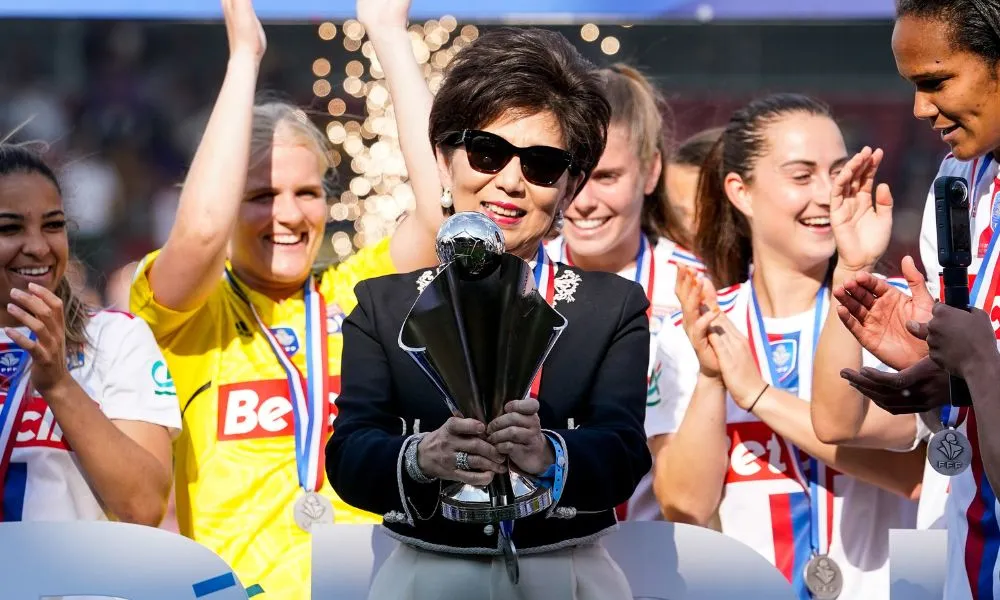
I have been following women's soccer finance for five years now. Back in 2021, nobody cared about NWSL valuations. Teams sold for pocket change.
Angel City paid a 2millionexpansionfee.Thatsameteamsoldfor2millionexpansionfee.Thatsameteamsoldfor250 million just four years later. The difference? Private equity walked in the door.
Private equity investment in NWSL teams has completely reshaped the league. I watched it happen in real time. Let me break down exactly what changed, who is buying, and what it means for the future of the sport.
Let me give you three numbers that explain everything.
Read Also: NCAA Revenue Sharing Model for Athletes in 2026 Explained
$2 million. That is what Angel City and San Diego Wave paid as expansion fees in 2022. Peanuts for a professional sports team.
$250 million. That is what Angel City sold for to Willow Bay and Bob Iger in 2024. One hundred and twenty-five times the original investment in two years.
$165 million. That is what Arthur Blank agreed to pay for an Atlanta expansion team in November. Just the expansion fee. Not even the team value.
Those numbers made every private equity fund sit up straight. Women's soccer was not a charity case anymore. It was a legitimate asset class.
Rodriguez-Ayala from Ariel Investments compared women's sports to small-cap stocks. She said men's teams are like Nvidia or Microsoft. Already huge. Harder to double. Women's teams?
They are the small companies that can blow it out of the park. That is exactly how PE firms think.
The money flowing into NWSL comes from three types of investors. Let me break them down.
Kara Nortman co-founded Monarch Collective. It is the first investment platform exclusively for women's sports. They raised a $250 million fund. They own stakes in three NWSL teams: San Diego Wave, Boston Legacy, and a European club called Viktoria Berlin.
Here is what makes Monarch different. They do not buy control. They buy minority stakes. They bring expertise. Nortman helped build Angel City from scratch. She knows how to put "butts in seats" as she puts it. That is the value she offers. Not just money. Actual operational knowledge.
Monarch recently became the first private equity firm approved to invest in the WNBA. They bought a stake in Cleveland's expansion team. That is a big deal. It means the leagues are opening doors.
Marc Lasry is the billionaire who sold his stake in the Milwaukee Bucks. He launched Avenue Sports Fund with over $1 billion in commitments.
In March 2026, Lasry invested 40millionintotheNorthCarolinaCourageata40millionintotheNorthCarolinaCourageata155 million pre-money valuation . He tried to buy control of the team in 2024.
The NWSL blocked it. League rules restrict private equity investment in NWSL teams to minority stakes only. So Lasry adjusted. He took a limited partner stake instead.
The Courage won championships in 2018 and 2019. They have a strong brand. Lasry is betting that brand keeps growing.
Ariel Investments is a Chicago-based asset management firm. Co-CEO Mellody Hobson also owns stakes in the Broncos and White Sox personally.
Ariel raised 250millionforProjectLevel.Thegoalis250millionforProjectLevel.Thegoalis1 billion. They invested in the Denver Summit, an NWSL expansion team. They also invested in League One Volleyball.
Emma Rodriguez-Ayala from Ariel predicts a $1 billion women's sports team within five years. That is not hype. That is a serious financial projection from a serious firm.
Sixth Street Partners headquarters is in San Francisco. They are a growth equity firm founded in 2009. They invest in sports. They invest in real estate. They invest in data infrastructure.
What exactly is Sixth Street doing in NWSL? The details are not public yet. But they are one of the major players in sports private equity. Keep watching them. They will make a move soon.
The firm is headquartered at 1 Letterman Drive in San Francisco. That is the Yoda Fountain building . Fun fact. Not relevant to the investment thesis. But fun.
Let me tell you about the Houston Dash owner situation. It is messy. And it teaches a valuable lesson about PE investment.
Ted Segal bought the Dash and the Dynamo for $400 million in 2021. The Dash were a "near-zero part of the financials" at that time. Five years later, Segal is trying to sell the Dash.
You Must Also Like: Fantasy Sports App Revenue: Trends and Insights
Last year, he had advanced talks with RHC Partners for about $120 million. That deal fell apart. Why? The buyer was connected to a Chinese billionaire who is currently in prison after a high-profile abduction by Chinese agents. The NWSL blocked the deal. They did not want the scrutiny.
Now the Dash sale process has restarted. The team is valued at $74 million, which ranks 10th out of 14 teams . That is below the league average.
A former Dynamo and Dash broadcaster named Glenn Davis said something harsh but true. He said the Dash feel like a side project. The core business was struggling. Adding a women's team just made existing staff do double duty. That is not a recipe for success.
The lesson? Money alone is not enough. You need dedicated ownership. You need focus. The teams that succeed have owners who treat the women's side as a priority, not an afterthought.
Kara Nortman has been open about her struggles investing in English women's soccer. She talked to about a dozen clubs in England. She has not closed a deal yet.
Her reason? Many WSL clubs are "afterthoughts" to their owners. They are just compliance tools for profitability and sustainability regulations. Not real business ventures.
Here is what Nortman said exactly: If they are afterthoughts, but there's awareness around them being afterthoughts, that's a beautiful place to spend time. But if they're afterthoughts and they just want to add a little expertise or capital on the margins, that's where it's tricky.
That is the difference between NWSL and WSL right now. NWSL teams are standalone assets. WSL teams are mostly attached to men's clubs. The NWSL model attracts serious PE money. The WSL model? Not as much.
Nortman says we are in the "third inning" of women's sports investment. Plenty of growth still ahead.
You need to understand the ownership rules. They dictate everything.
The NBA, NFL, NHL, MLB, MLS, and NWSL have all changed their ownership frameworks to allow private equity investment. But there are limits.
In NWSL, private equity cannot take control stakes. They can only buy minority positions. That is why Lasry took an LP stake in the Courage instead of control. That is why Monarch buys minority stakes across multiple teams.
These rules protect the league. They prevent PE firms from flipping teams for quick profits. They keep control in the hands of long-term owners. That is smart.
But the rules are loosening. The NBA just expanded from allowing five to eight PE ownership groups. Other leagues will follow. NWSL likely will too.
Franklin County, Ohio just approved a deal to bring an NWSL team to Columbus. The county commits up to 25millionover15years.Theownershipgroupmustcommit25millionover15years.Theownershipgroupmustcommit12 million in community benefits.
Half of that money goes to early childhood learning. Half goes to food insecurity programs. That is the new model. Teams are not just sports franchises anymore. They are community assets.
This is exactly what PE investors want to see. Teams embedded in their communities. Revenue streams beyond just ticket sales. Long-term stability.
The Columbus ownership group is called Columbus Women's Soccer Holdings. We do not know yet if PE money backs them. But it probably does. That is just how expansion works now.
Ariel Investments says a women's sports team will hit $1 billion valuation within five years . Let me give you my honest take.
But a $1 billion valuation requires real revenue. Big media deals. Sellout crowds. Corporate sponsorships. Only the top teams will get there. The bottom teams will lag behind.
Rodriguez-Ayala compared it to small-cap investing. Some small companies blow up. Most do not. Pick the right team. That is the challenge.
Deloitte says global women's sports revenues will reach $3 billion in 2026. That is a 340% increase in four years. The pie is growing. Everyone wants a slice.
Let me give you the honest breakdown. No corporate spin.
The Pros:
More money for players. Salary caps will rise. Better talent stays longer.
Professional operations. PE firms bring systems. They bring data. They bring marketing budgets.
Stability. No more teams folding. PE money stays for the long haul.
Higher valuations. Every team benefits when one team sells for a big number.
The Cons:
Loss of local identity. PE firms do not care about your city. They care about returns.
Ticket price increases. Someone has to pay for those $40 million investments. That someone is you, the fan.
Short-term pressure. PE funds have 5-10 year horizons. They want exits. That can mean selling to the highest bidder, not the best bidder.
The Houston Dash situation shows the risk. Segal bought the team. He did not really care about it. Now he is selling. The team never got the focus it deserved.
Compare that to Angel City. Local owners. Celebrity involvement. Real community roots. That is the model that works.
Let me give you practical advice if you are thinking about investing in NWSL.
You should invest if:
You have a 10+ year time horizon. This is not a quick flip.
You bring operational expertise, not just money.
You are willing to be a minority partner. Control is off the table.
You care about women's sports as more than a spreadsheet.
You should NOT invest if:
You want immediate returns. Those are not happening yet.
You cannot handle scrutiny. NWSL vets owners carefully after the abuse scandals.
You see the team as a "side project." That is exactly how teams fail.
The NWSL denied the RHC deal because the money came from a questionable source . They will deny you too if your background does not pass muster. Come correct or do not come at all.
The league keeps expanding. Atlanta joins in 2028 for a $165 million fee . Columbus is coming soon. Denver is already in the pipeline. The fees keep going up.
Private equity will keep pouring in. Monarch has 250milliontodeploy.Arielhas250milliontodeploy.Arielhas250 million and wants 1billion.AvenueSportshasover1billion.AvenueSportshasover1 billion. That is a lot of money chasing a limited number of teams.
Valuations will rise. That is guaranteed. Whether the on-field product improves depends on how the money gets spent. Put it into players and facilities. That works. Put it into executive bonuses. That does not.
Kara Nortman believes we are in the third inning . That means seven innings left to play. Plenty of time. Plenty of opportunity. But also plenty of chances to strike out.
I will be watching. You should too.