
I track global shipping routes for my work. When the Strait of Hormuz started making headlines in February, I paid close attention. My clients needed to know if their supply chains would survive.
The situation changes daily. One day the strait is open. The next day it is closed. Ships get stuck. Oil prices spike. Then everything calms down again.
Here is what is actually happening right now. No speculation. Just facts from someone watching this closely.
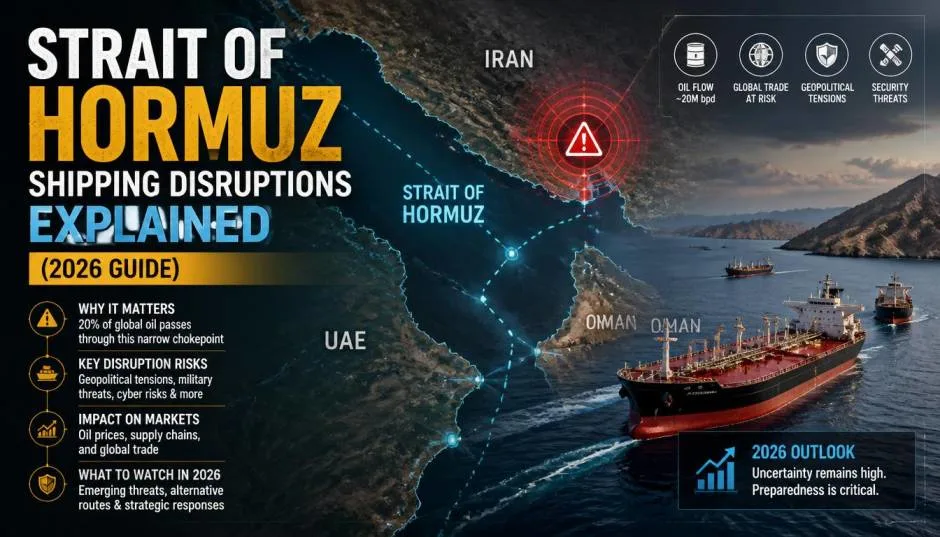
The Strait of Hormuz shipping disruptions started when the US and Israel launched a war against Iran on February 28, 2026. Iran responded by attacking ships attempting to pass through without permission. Traffic dropped from 130-160 ships daily to about six.
Read Also: The Utah Mortgage Rate Dip: 3 Reasons Why Waiting Until Summer Could Cost You?
The strait remains partially blocked. Iran has not fully reopened it despite a ceasefire agreement. Ships can pass, but only with Iranian permission. They must use routes approved by Tehran.
On June 30, 2026, a foreign container ship ran aground in the strait. Iranian state TV reported it was using a route not approved by Iran. The Guard's navy warned that any entry through other routes "could lead to irreparable incidents.
The current number: 42 vessels were in the waterway as of Wednesday morning. Only 11 ships transited in the previous 24 hours . Pre-war levels were 130-160 ships daily.
About one-fifth of the world's oil and natural gas passes through the Strait of Hormuz in peacetime. That is roughly 17 million barrels of oil daily.
When Iran restricts traffic, global energy prices surge. Fuel costs go up. Shipping insurance premiums spike. Consumer goods become more expensive.
The ripple effects: Thai officials reported 10 out of 11 Thai-flagged vessels departed safely. South Korea said all but two of their 26 stranded vessels left. But many ships remain stuck offshore, waiting for Iranian permission.
Iran insists the strait is not closed . But the reality is different.
Approved routes only: Iran requires all oil tankers to use specific routes close to its coast. The Khatam al-Anbiya military command warned on July 1 that any deviation "will be met with an immediate and forceful response".
Fees and permits: Tehran demands payment for passage. The Persian Gulf Strait Authority issued a memo requiring valid passage permits . Ships without permission face attacks.
Seized vessels: The BBC visited Bandar Abbas and saw two container ships seized by Iran's Revolutionary Guard in April. The MSC Francesca and Epaminondas remain detained.
Both sides interpret the interim agreement differently.
You Must Also Like: How to Invest in AI Startups as Small Investor in USA?
The US says the 60-day ceasefire includes free passage without charges. Iran argues they control the routes and can charge fees.
The sticking point: Iran claims the strait is closed "only to our enemies". Foreign Minister Abbas Araghchi said restrictions would lift only when the war ends.
Oman's alternative route: The UN International Maritime Organization launched a new route near Oman's shore. Iran responded with attacks. The IMO paused evacuations after an Iranian attack on a vessel in the Gulf of Oman .
Is the strait open or closed? The answer depends on who you ask.
The US says it remains open for shipping traffic. Iran says it is closed. Experts say the truth lies somewhere in between.
What the data shows: On June 28, 44 ships moved through the strait. 24 entered. 20 exited. Marine traffic data firm Windward said "the strait open without impeding freedom of navigation despite ongoing military activity".
The split: Of 108 ships that transited last weekend, 39 used the US-backed Oman route. 37 used the Iranian route. 23 had switched off navigation systems. 9 used the old middle route . Operators are still cautious.
The dilemma: Paying Iran's Revolutionary Guard for passage means facing US or EU sanctions. Not paying means risking attacks.
Insurance costs: Premiums for ships transiting the strait have skyrocketed. Many owners simply refuse the route.
The risk calculation: Ian Ralby, a maritime security expert, told CBC the strait is not open in any "meaningful" way. "Ship owners are also pretty risk-averse when the risk is potentially bankruptcy".
The situation remains tense.
Latest warnings: On July 1, Iran's military command issued a fresh warning. Any oil tanker deviating from approved routes faces a "forceful response". The statement came after US diplomats met with mediators in Qatar.
The funeral factor: Iran is preparing for the funeral of Supreme Leader Ayatollah Ali Khamenei, killed in the war's first moments . Talks for a permanent peace are paused until after the funeral.
Positive progress: Despite the threats, Pakistani officials reported "positive progress" in indirect talks. Negotiations continue through mediators.
For shipping companies, the strait is neither fully open nor fully closed.
Limited passage: Ships can transit, but only with Iranian permission. They must use approved routes and pay fees.
No normal traffic: Traffic remains far below pre-war levels. The IMO evacuation plan for 11,000 seafarers shows how serious the situation is .
Military presence: Iranian forces control the waterway. US fighter jets patrol overhead . The risk of escalation remains high.
I track these three sources daily.
MarineTraffic.com: Shows real-time ship positions. You can see which routes ships are using.
AP News: Jon Gambrell provides excellent Gulf coverage.
BBC News: Recent reporting from Bandar Abbas offers ground-level perspective.
The Strait of Hormuz is a geopolitical pressure point. Iran uses it as leverage. The US wants it open. Ships get caught in the middle.
What I learned: Pay attention to the Islamic Revolutionary Guard Corps statements. When they warn, they mean it. The attacks on June 25 and June 27 proved that.
What worries me: The IMO evacuation plan paused after an Iranian attack . That tells you how fragile the situation remains.
What gives me hope: Oil prices have fallen to pre-war levels . Talks are progressing. The strait is moving toward normalcy. Just slower than anyone wants.